Inside an NFL Equipment Room in 1989
Jay Brunetti reflects on his early days with the Redskins, the evolution of the equipment profession and a career spanning five decades.
Long before today’s expansive equipment facilities, advanced inventory systems and seemingly endless choices in player apparel, NFL equipment managers were already tackling an enormous job behind the scenes. In September 1989, The Washington Post Magazine offered readers an inside look at that world in a story by Peter Carlson titled “Adventures in the Skins Trade.”
The story followed the Washington Redskins through training camp at Dickinson College in Carlisle, Pennsylvania, and into the complicated operation of preparing an NFL team for practice, travel and game day. Among those featured was equipment manager Jay Brunetti, whose responsibilities extended far beyond handing players their helmets and shoulder pads.
Nearly four decades later, we caught up with Jay to hear what he remembers about those days and how he has watched the profession change.
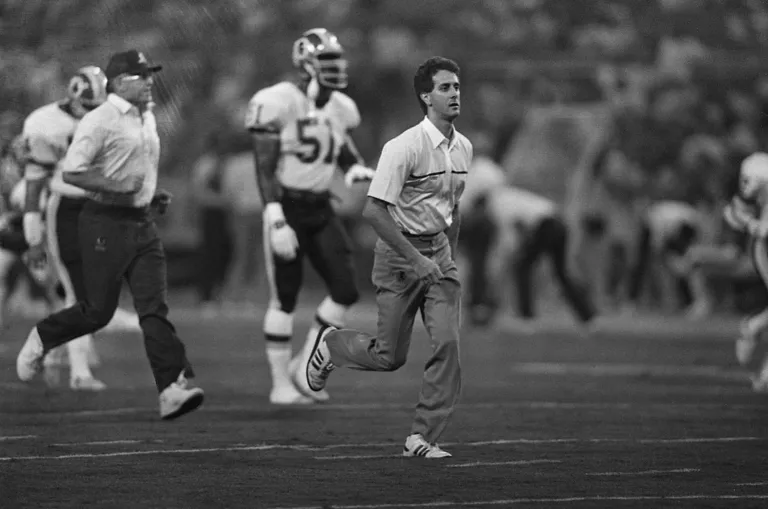
An equipment room full of everything
The 1989 article gives a remarkable picture of the inventory Brunetti was responsible for maintaining. His equipment operation included approximately 150 helmets, 150 pairs of shoulder pads, 400 jerseys, 200 pairs of football pants and somewhere between 400 and 480 footballs. Add 50 dozen game socks, 30 dozen jocks, hundreds of pairs of shoes, and all the smaller pieces needed to keep players ready, and it becomes clear that the job required considerable organization.
And that was only part of the challenge. Equipment had to be maintained, repaired, distributed and transported, with the right items available when players needed them.
Footwear was a particularly involved part of the operation. Different playing surfaces and weather conditions called for different shoes. New artificial turf could grip differently from an older, worn-down surface, while heat, rain and cold created their own challenges. The equipment staff had to understand those differences and prepare accordingly.
Today, equipment managers have access to an expanded range of footwear, gloves, protective gear and apparel. But the principle remains the same: having equipment in stock is only half the job. Knowing what each player needs, and having it ready at the right time, is what matters.
Jay remembers a much simpler selection of products in those days, along with smaller equipment rooms and tighter budgets.
“Obviously we didn’t have as many equipment pieces and options ( gloves are a great example…. Just had receivers and linemen gloves in one color as opposed to all the styles and color options today ) but we just worked our butts off to make it thru each week!”
Preparing for the road
The article also showed how much work went into an NFL road trip. While the players traveled to their destination, the equipment staff had to get the team’s gear to the stadium, unload it and set up the visitors’ locker room.
Every player’s locker needed to be inspected to make sure the essential equipment was there. Helmets, shoes, shoulder pads and the other necessary items had to be in place before kickoff, with additional supplies available to address unexpected problems.
One story from the article captured exactly why those checks mattered. During a trip to Atlanta, cornerback Darrell Green discovered that his helmet had been left behind in Washington. Brunetti arranged to have it sent on another plane, but first he let Green believe there might be a serious problem. The helmet arrived, the situation was resolved, and Green gained a fresh appreciation for the work happening behind the scenes.
The story also described the equipment truck traveling between team buses on the return trip, helping keep the valuable load protected. Even after the game was over, the operation wasn’t finished. The equipment had to be gathered, loaded and transported home, sometimes under considerable time pressure.
One memorable incident involved truck drivers who refused to leave until they received their required dinner break. With the team’s schedule pressing, Brunetti and the staff had to find a solution. The eventual answer? Fried chicken.
It was a humorous example of a serious reality: equipment managers need to solve problems that have little to do with the actual equipment, but everything to do with getting the job done.
What has changed—and what hasn’t
Looking back, Jay sees major differences in the way NFL equipment departments operate today. Staffing levels and budgets have grown, facilities are larger, travel destinations have expanded, and player equipment has advanced considerably, including innovations designed to improve safety.
The number of people an equipment department supports has grown as well. Players, coaches and support personnel all depend on the staff, and modern operations have larger teams to meet those demands.
As Jay explained, however, the basic rhythm of the profession remains familiar.
“What has stayed the same is the weekly schedule of practices and games….we do the same job while servicing more players, coaches and support staff but we have larger equipment team staffs to take care of all the people….”
The products may change, the facilities may grow, and the logistics may become more complicated, but equipment managers still face the same recurring demands: prepare for the week, anticipate what could go wrong, take care of the details and make sure everyone is ready when the team takes the field.
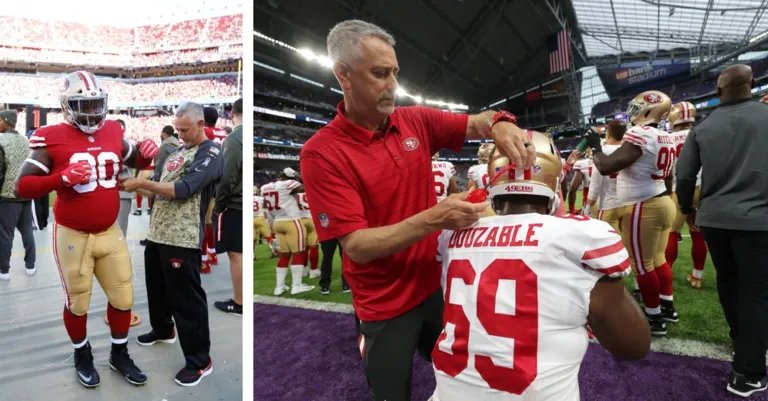
A career built on finding a way
Jay’s own career provides a remarkable perspective on that evolution. He told us that he was named equipment manager by Head Coach Joe Gibbs and General Manager Bobby Beathard in 1981, when he was just 19 years old. He has remained in charge ever since.
Jay also shared that he counts this season as his 50th year in the profession. That milestone reflects a career that began before he was named equipment manager and has continued through decades of change across the NFL.
Despite all those years, he says his passion for the league and the work has never faded.
For anyone who has spent time in an equipment room, Jay’s final observation may be the most familiar part of his response. Every week brings different circumstances, unexpected challenges and problems that need immediate solutions. There is rarely time to wait for things to get easier.
Jay’s message was clear: no matter what challenges an equipment staff faces, the job is to get it done and find a way.
That sentiment could serve as a motto for equipment managers everywhere. The technology and resources available to teams have changed enormously since 1989, but preparation, resourcefulness and determination remain at the heart of the profession.
For this Throwback Thursday, we thank Jay Brunetti for sharing his memories and perspective—and for giving us a firsthand connection to an era of NFL equipment operations that helped shape the profession we know today. Check out the link to the article in the first paragraph and enjoy a look back at how professional football was in the late 80s.